How Israel, Iran, and US Tensions at the Strait of Hormuz Impact Oil, Gold & Forex Markets
Sat Feb 28 2026
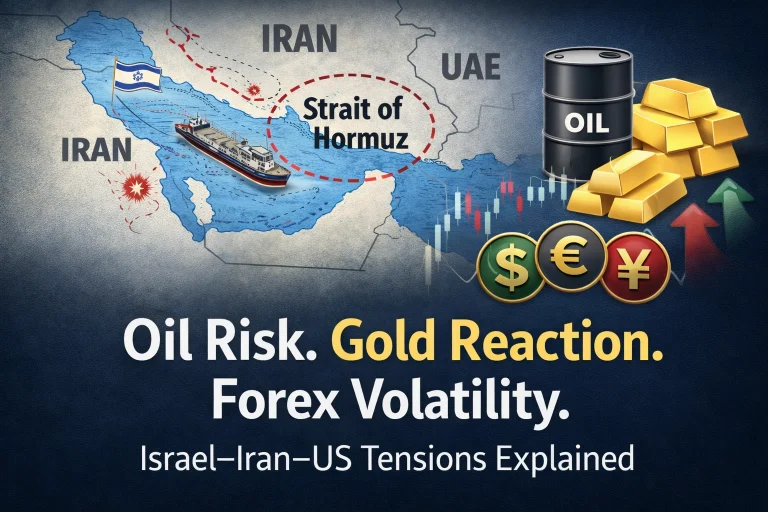
Geopolitical tensions between Israel and Iran periodically raise concerns about oil supply disruption, inflation pressure, and financial market instability. For forex and commodity traders, understanding how such conflicts influence oil prices, gold demand, and currency volatility is more important than reacting emotionally to headlines.
This guide explains the structural transmission mechanism from geopolitical conflict to oil, gold, and forex markets — and what disciplined traders should learn from these events.
Oil Supply Disruption Risk and the Strait of Hormuz
What Is the Core Issue?
When Israel–Iran tensions escalate, markets immediately assess the risk of disruption to the Strait of Hormuz, a narrow maritime passage connecting the Persian Gulf to global shipping routes.
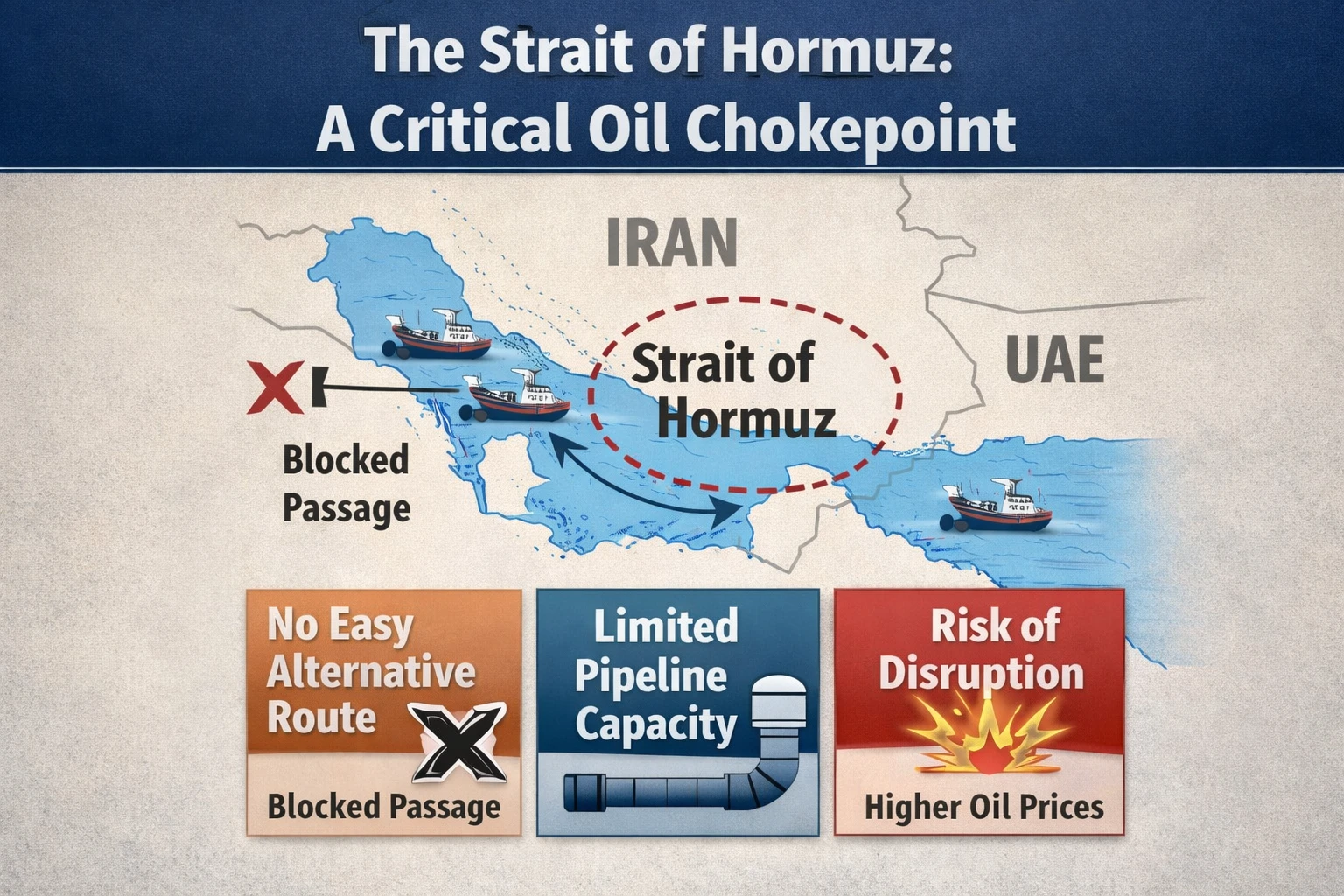
Roughly 20% of global crude oil trade flows through this passage. Most Gulf exporters rely on it as their primary sea exit.
Why Does This Matter for Oil Prices?
Oil futures markets price expected supply disruptions before they happen.
Even credible threats can create:
- A geopolitical risk premium
- Higher tanker insurance costs
- Increased hedging activity
- Speculative positioning
If shipping slows or supply drops, global inventories tighten, which can accelerate price volatility.
Why Can’t Tankers Simply Take Another Route?
The Persian Gulf is geographically enclosed.
- The Strait of Hormuz is the primary maritime exit.
- There is no alternate sea route from inside the Gulf.
- Some pipelines bypass Hormuz, but capacity is limited.
This means disruption reduces export volume, not just travel time.
What Traders Should Learn
- Oil reacts to probability, not confirmation.
- Initial spikes may retrace if tensions ease.
- Volatility expands quickly; risk must be adjusted accordingly.
Gold as a Safe-Haven During Geopolitical Risk
What Typically Happens?
Gold often strengthens when geopolitical uncertainty rises.
Why Does Gold React?
Oil price spikes can increase inflation expectations. Higher inflation concerns may reduce real interest rates, which can support gold.
Gold also benefits from:
- Risk-off positioning
- Portfolio diversification
- Central bank reserve management
However, gold is heavily influenced by:
- US Dollar strength
- Treasury yields
- Global liquidity conditions
What Traders Should Learn
- Gold’s move is conditional, not automatic.
- Correlation with USD must be monitored.
- Overleveraging during volatility increases downside risk.
Professional traders adjust position size when volatility expands.
Forex Market Volatility During Conflict
What Happens to Currencies?
In geopolitical stress, the US Dollar often strengthens due to its reserve currency status and global liquidity demand.
At the same time:
- Oil-importing countries may face trade balance pressure.
- Inflation risks may influence central bank policy.
- Commodity-linked currencies may react to sustained oil moves.
Why Does Volatility Increase?
During uncertainty:
- Liquidity thins.
- Spreads widen.
- Institutional repositioning accelerates.
Markets reprice macro expectations rapidly.
What Traders Should Learn
- Correlations temporarily strengthen.
- Market structure becomes more important than headlines.
- Avoid trading based solely on news events.
Risk Management During Geopolitical Volatility
What Changes in Trading Conditions?
Volatility expansion means:
- Larger price swings
- Faster momentum
- Increased stop-loss hunting
Practical Example
If your normal stop-loss is 30 pips in stable conditions, volatile markets may require 60–80 pips to reflect structure.
However:
- Position size must decrease proportionally.
- Risk per trade should remain consistent (e.g., 1% of capital).
- Correlated exposure (oil, gold, USD pairs simultaneously) should be monitored.
What Traders Should Learn
Capital preservation is the foundation of long-term survival.
Geopolitical events test discipline more than analysis.
Trading Psychology During Crisis Headlines
What Psychological Traps Occur?
- Chasing breakouts after large moves
- Increasing leverage due to excitement
- Overtrading every headline
Why This Happens
News creates urgency and fear of missing out.
But markets often overreact before stabilizing.
What Traders Should Learn
- Wait for confirmation in market structure.
- Define risk before entry.
- Accept that sometimes the best trade is no trade.
Frequently Asked Questions
Does oil always rise during Israel–Iran conflict?
Not necessarily. It depends on credible supply disruption risk and market positioning.
Is gold guaranteed to increase during geopolitical tension?
No asset is guaranteed to move in one direction. USD strength and interest rates can offset gold gains.
Should beginners trade during geopolitical volatility?
Only if they reduce position size and understand volatility expansion.
How long do geopolitical price spikes last?
Many are temporary unless supported by structural supply changes.
Conclusion: Focus on Structure, Not Speculation
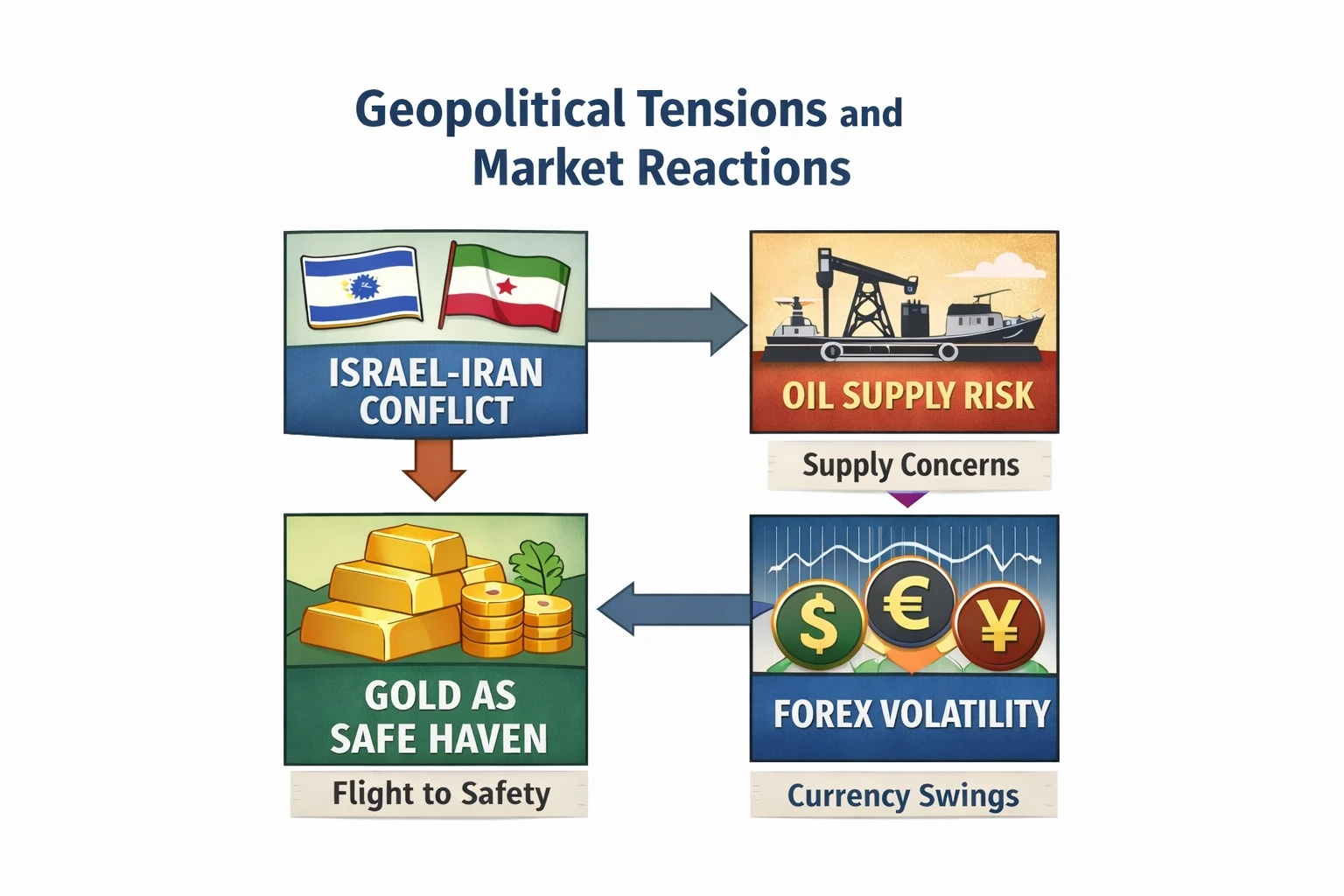
The Israel–Iran conflict impacts oil, gold, and forex markets primarily through supply risk, inflation expectations, and changes in risk sentiment.
The Strait of Hormuz remains central because export alternatives are limited. Even credible threats can create volatility.
However, markets continuously reprice probabilities. Escalation and de-escalation are both possible.
Professional trading requires:
- Understanding macro transmission
- Managing volatility
- Preserving capital
- Thinking in probabilities
This content is for educational purposes only and does not constitute financial advice. All trading involves risk.

Written by
Trade Together Research
Trade Together Research is a professional market analysis team providing forex, gold, and crypto trading insights, technical analysis, and educational guides.. Learn more about our research team on the About page.